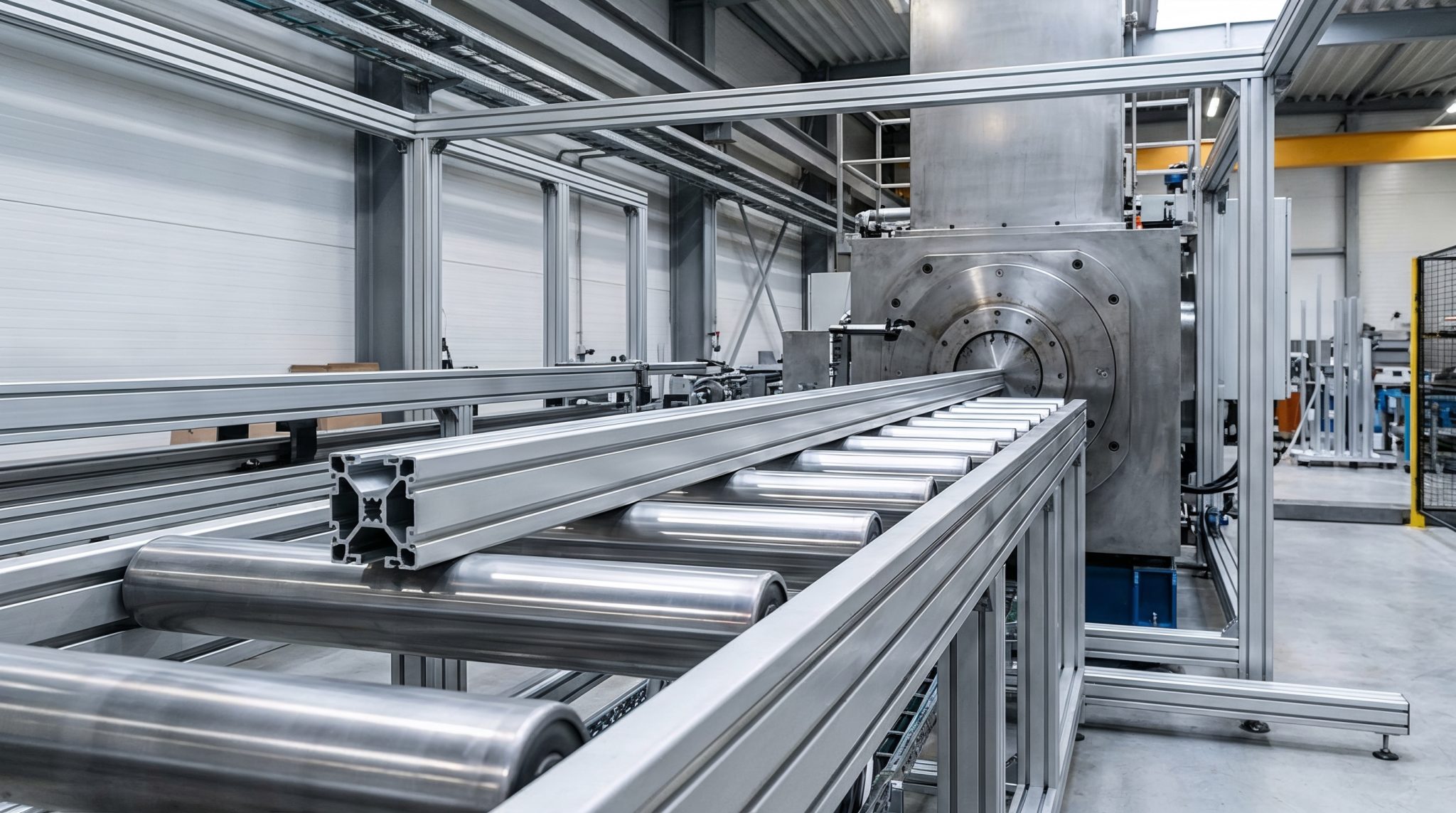
OUR TECHNOLOGY
A New Deformation
Regime for Aluminum
Shear-based microstructural engineering redefines how performance is created in aluminum.
LEGACY OF INNOVATION
The Precedent: Solid-State Breakthrough
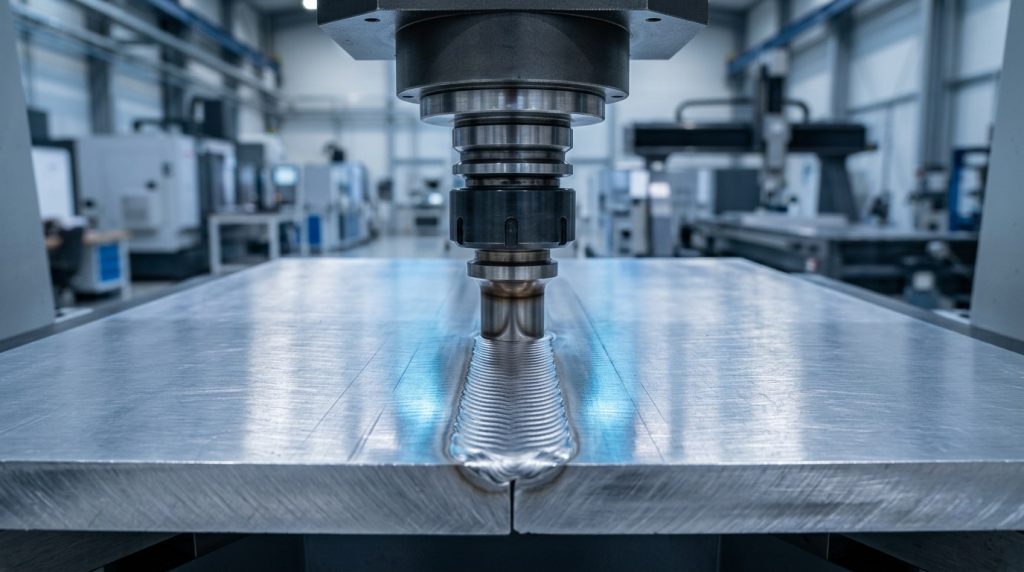
Friction Stir Welding, developed by The Welding Institute in Cambridge, UK (1991), demonstrated that solid-state deformation could fundamentally change aluminum performance.
It enabled high-integrity aerospace structures, improved weld strength without melting but mixing, and opened applications previously considered unachievable.
Shear extrusion builds on this principle—applying solid-state deformation not just to joining, but to forming.
Shear Extrusion
Shear Deformation Changes the Physics
Atomic13 introduces intense shear deformation during extrusion, fundamentally altering how material flows and forms. This allows grain refinement, fragmentation of intermetallic phases, reduction of segregation, and uniform edge-to-core microstructure. Performance is engineered during deformation—not inherited from upstream processes.
Value of Progress
What This Enables
- Unparalleled uniformity in properties and dimensions from end to end and through the thickness of the mill finish extrusion
- Unrivaled levels of strength in structural alloys that push the limits of lightweighting to new heights
- Weld seams approaching parent material strength
- Simultaneous strength and ductility improvements
- Consistent microstructure across complex profiles
- Ability to utilize heterogeneous, lower quality scrap inputs which generate superior results
- A disconnect from the standard aluminum market pricing indices (MWP and LME)
- A zero-carbon footprint related to raw materials due to use of 100% post-consumer scrap – 0% prime (smelted) inputs

Hollow profiles with strong natural welds

